Compression Socks for Dysautonomia
Dysautonomia affects the autonomic nervous system, often causing blood to pool in the lower body when standing. Our compression socks are designed specifically for people living with dysautonomia, POTS, and other forms of autonomic dysfunction.
Understanding Dysautonomia
Dysautonomia is an umbrella term for conditions that affect the autonomic nervous system — the part of your nervous system that controls involuntary functions like heart rate, blood pressure, and digestion.
Common types include POTS (Postural Orthostatic Tachycardia Syndrome), neurocardiogenic syncope, and autonomic neuropathy. Many forms of dysautonomia cause problems with blood pressure regulation and circulation.
Common Symptoms:
- Dizziness on standing
- Rapid heart rate
- Blood pooling in legs
- Fatigue
- Brain fog
- Exercise intolerance
- Temperature dysregulation
- Fainting or near-fainting
How Compression Helps Dysautonomia
Reduces Blood Pooling
Graduated compression applies pressure to the legs, preventing blood from pooling in the lower extremities when you stand or sit.
Supports Venous Return
By narrowing blood vessels, compression increases blood flow velocity back to the heart, reducing the burden on your cardiovascular system.
Stabilizes Blood Pressure
Better venous return means more stable blood pressure when changing positions, reducing dizziness and lightheadedness.
Shop Compression for Dysautonomia
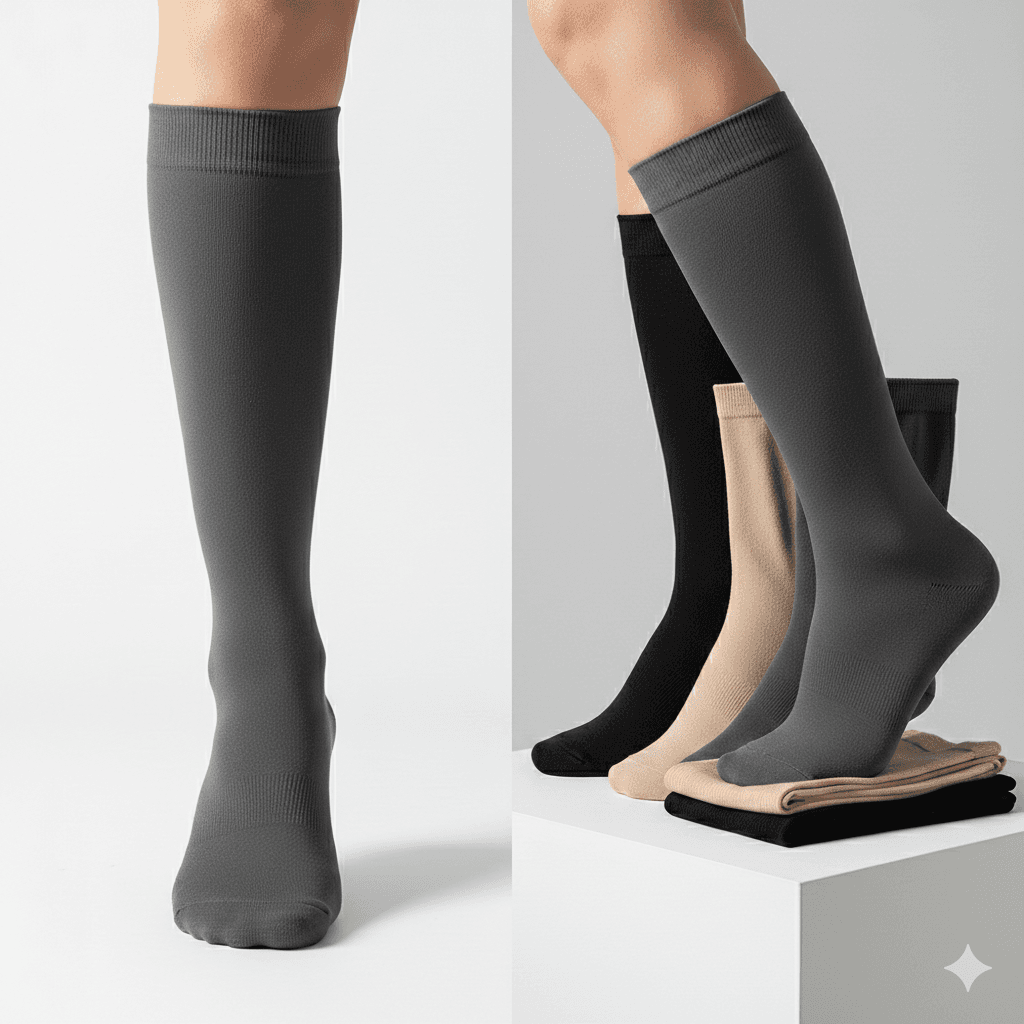
Choosing the Right Compression Level
Daily Wear / Mild to Moderate Symptoms
Most patients with dysautonomia start here. Provides noticeable symptom relief while being comfortable enough for all-day wear. Easier to put on and a good starting point if you're new to compression.
Medical Grade / Moderate to Severe Symptoms
Stronger compression for more severe symptoms or when lighter compression isn't enough. Often recommended by specialists for significant blood pooling. May require more effort to put on.